
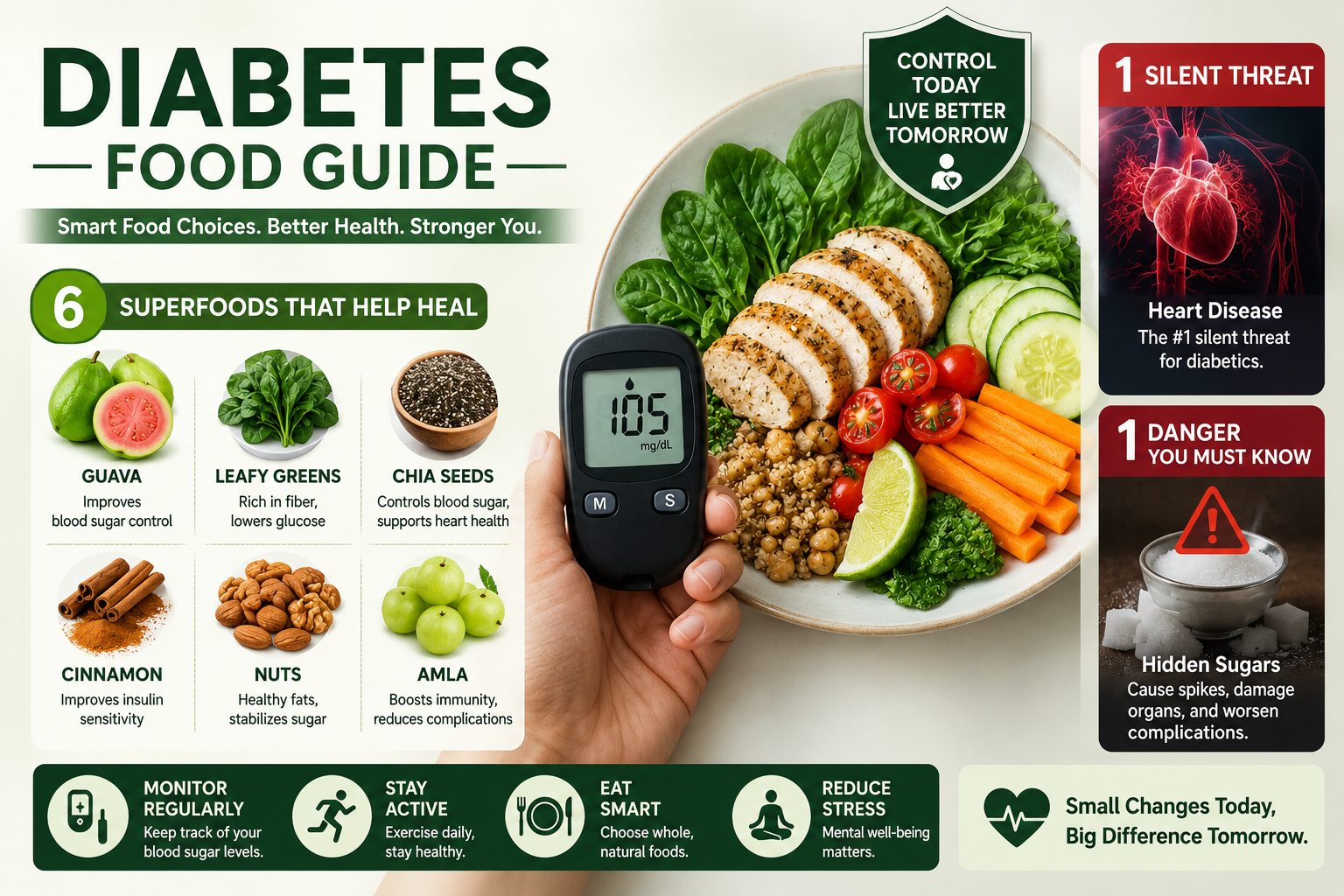
Introduction | परिचय
Diabetes is not a single disease. It is a complex metabolic maze where what you eat, what you ignore, and what you misunderstand can literally cost you your limbs, your vision, or your life. Yet, most people with diabetes receive the same vague advice: “Just avoid sugar.”
But here is the shocking truth—some sweet foods actually lower blood sugar, while some “healthy” foods can silently destroy your nerves and kidneys. And to make matters worse, most people don’t even know that diabetes insipidus is completely different from the diabetes they fear.
This is your comprehensive, no-BS guide to 6 diabetes superfoods, 1 hidden danger (diabetic foot), and 1 misunderstood condition (diabetes insipidus). By the end of this article, you will know exactly which fruits to eat, which to moderate, and how to protect your feet from amputation.
Let’s solve the Diabetes Food Puzzle once and for all.
Section 1: The Sweet Paradox – Fruits That Actually Fight Diabetes | मीठा विरोधाभास – फल जो डायबिटीज से लड़ते हैं
Is Guava Good for Diabetes? The Definitive Answer | क्या डायबिटीज में अमरूद अच्छा है? पूरा सच
Short Answer: Yes. Guava is arguably the best fruit for diabetes.
Long Answer: Guava has a glycemic index (GI) of just 12—one of the lowest among all fruits. But the real magic lies in its 5.4 grams of dietary fiber per 100g. This fiber forms a gel-like substance in your gut that physically traps glucose molecules, slowing their absorption into the bloodstream.
The Science Behind Guava’s Anti-Diabetic Power
A groundbreaking study published in the NIH repository demonstrated that guava fruit and leaf extracts inhibit intestinal glucose transport by up to 80%. How? By blocking the GLUT2 and SGLT1 receptors in your gut—the same pathways that prescription drugs target.
Additionally, guava contains polyphenols like quercetin and gallic acid that inhibit alpha-amylase and alpha-glucosidase enzymes. These are the enzymes responsible for breaking down starchy foods into sugar. When guava inhibits these enzymes, your body processes carbohydrates slower, resulting in a blunted post-meal glucose spike.
How to Eat Guava for Maximum Benefits
- Eat it raw with the skin (if your cholesterol is normal)—the skin contains concentrated antioxidants.
- Peel it if you have high cholesterol, as studies suggest peeling can help control lipid levels better.
- Avoid guava juice—commercial juices contain added sugar and lose the critical fiber.
- Best time: As a mid-morning snack or 30 minutes before a meal to reduce overall calorie intake.
Key Takeaway: Guava is not just “safe” for diabetics—it is therapeutic.
Is Sweet Potato Good for Diabetes? The Carb Confusion Solved | क्या शकरकंद डायबिटीज में अच्छा है? कार्ब कन्फ्यूजन का हल
Short Answer: Yes—if you eat it correctly.
Long Answer: Sweet potatoes are starch-heavy, which makes many diabetics run in the opposite direction. But here’s the twist: sweet potatoes have a GI ranging from 44 to 61, depending on how they are cooked. Boiled sweet potatoes have a GI of 44 (low), while baked ones can go up to 94 (high).
Why Sweet Potatoes Are a Superfood for Diabetes
- High in Resistant Starch: When you boil and cool sweet potatoes, the starch transforms into resistant starch—a type of fiber that isn’t digested in the small intestine. Instead, it ferments in the large intestine, producing short-chain fatty acids that improve insulin sensitivity.
- Rich in Beta-Carotene: This antioxidant converts to Vitamin A, which protects pancreatic beta-cells (the cells that produce insulin) from oxidative damage.
- Contains Caiapo: A specific type of sweet potato (White Skinned) has been studied for its anti-diabetic properties. A study found that Caiapo extract reduced fasting blood glucose by an average of 30 mg/dL in Type 2 diabetics.
The Golden Rule for Eating Sweet Potatoes
- Always boil or steam—never bake or fry.
- Eat with the skin—the skin is packed with fiber.
- Control portion size—stick to one medium sweet potato (150g) per meal.
- Pair with protein—eat it with grilled chicken or beans to slow sugar absorption even further.
Key Takeaway: Sweet potatoes are not the enemy. White potatoes are. Swap your regular potato for a boiled sweet potato, and you’ll get better blood sugar control with more nutrition.
Is Banana Good for Diabetes? The Ripeness Rule | क्या डायबिटीज में केला अच्छा है? पकने का नियम
Short Answer: Yes—but only if it’s slightly green.
Long Answer: Bananas are one of the most controversial fruits in the diabetic community. A fully ripe banana with brown spots has a GI of 62 (moderate), but a green, unripe banana has a GI of just 42 (low). The difference comes down to starch composition.
The Starch-Sugar Transformation
- Green Bananas: Contain high amounts of resistant starch and pectin. Your body cannot digest resistant starch, so it passes through your system without raising blood sugar. It also feeds your gut microbiome, improving overall metabolic health.
- Yellow Bananas: As the banana ripens, enzymes convert the starch into simple sugars (fructose, glucose, and sucrose). This raises the GI significantly.
How to Eat Bananas Safely
- Choose green or semi-green bananas.
- Eat half a banana at a time if you must eat ripe ones.
- Pair with nuts or peanut butter—the fat and protein slow sugar absorption.
- Avoid banana smoothies—blending breaks down the fiber, making sugars release faster.
Key Takeaway: Bananas are not forbidden. They are a conditional food. Green is good; brown is bad.
Is Papaya Good for Diabetes? The Digestive Miracle | क्या डायबिटीज में पपीता अच्छा है? पाचन का चमत्कार
Short Answer: Yes—papaya is one of the safest fruits for diabetes.
Long Answer: Papaya has a GI of 60, which is moderate, but its glycemic load (GL) is only 3—extremely low. Glycemic load accounts for both the quality and quantity of carbs, making it a more accurate measure. A GL of 3 means even a full serving of papaya has minimal impact on blood sugar.
What Makes Papaya Special?
- Rich in Fiber: One cup of papaya contains about 3 grams of fiber, which slows sugar absorption.
- High in Antioxidants: Papaya is loaded with vitamins A, C, and E, which reduce inflammation—a major driver of insulin resistance.
- Contains Papain: This enzyme aids digestion and reduces gut inflammation, improving nutrient absorption and metabolic function.
- Folate Rich: Papaya is a great source of folate, which helps lower homocysteine levels—an amino acid linked to heart disease (a common diabetes complication).
How to Eat Papaya Safely
- Eat it raw and fresh—avoid canned papaya in syrup.
- Limit to one cup (150g) per day.
- Eat it as a snack between meals rather than with heavy carbs to avoid overlapping sugar spikes.
Key Takeaway: Papaya is a safe, nutrient-dense fruit that supports digestion and reduces inflammation. It is a “green light” fruit for most diabetics.
Section 2: The Silent Killer You’re Ignoring | डायबिटिक फुट – वह खतरा जिसे आप नज़रअंदाज कर रहे हैं
Diabetic Foot: The Amputation Danger Nobody Talks About | डायबिटिक फुट: वह खतरा जिसकी चर्चा कोई नहीं करता
Diabetes is not just about blood sugar. The most devastating complication often goes unnoticed until it’s too late. Diabetic foot refers to a group of problems—nerve damage (neuropathy), poor blood circulation (peripheral vascular disease), and infections—that can lead to gangrene and amputation.
Why Does Diabetic Foot Happen?
- Neuropathy: High blood sugar damages the small blood vessels that feed your nerves. Over time, you lose sensation in your feet. You cannot feel a blister, a cut, or a pebble in your shoe. That tiny injury becomes infected.
- Poor Circulation: Diabetes hardens and narrows your arteries (atherosclerosis), reducing blood flow to the feet. Without adequate blood flow, wounds do not heal. A small sore becomes a deep ulcer.
- Immunity Suppression: High glucose levels feed bacteria and fungi, making infections rapid and aggressive.
Shocking Statistics
- Every 30 seconds, a limb is amputated somewhere in the world due to diabetes.
- 85% of amputations are preceded by a foot ulcer.
- 50% of people with diabetic foot ulcers die within 5 years—a mortality rate higher than many cancers.
How to Prevent Diabetic Foot – Your Daily Checklist
Every Single Morning:
- Wash your feet with warm (not hot) water and mild soap.
- Dry thoroughly—especially between the toes where fungus grows.
- Inspect your feet using a mirror—check the soles, heels, and between toes for cuts, blisters, redness, or swelling.
- Moisturize the tops and soles (never between toes).
- Wear diabetic socks (seamless, non-binding) and properly fitted shoes.
- Never walk barefoot, even indoors.
Annual Checkups:
- Get a monofilament test (to check nerve sensation) and a doppler test (to check blood flow) at least once a year.
When to See a Doctor Immediately
- Any cut, blister, or sore that does not heal in 2 days.
- Blackened or blue toes (gangrene).
- Swelling, redness, or warmth (infection).
- Foul odor from the foot.
Key Takeaway: Your feet are the canary in the coal mine for diabetes. Daily inspection and proper footwear can save your limbs. Do not ignore even minor cuts.
Section 3: The Great Diabetes Confusion | डायबिटीज इंसिपिडस: वह बीमारी जो डायबिटीज नहीं है
What Is Diabetes Insipidus? The Water Diabetes Explained | डायबिटीज इंसिपिडस क्या है? पानी वाली डायबिटीज की पूरी जानकारी
This is one of the most misunderstood conditions in medicine. Despite its name, diabetes insipidus (DI) has NOTHING to do with blood sugar. It is a completely different disorder caused by a problem with the hormone vasopressin (ADH—Anti-Diuretic Hormone).
The Difference Between Diabetes Mellitus and Diabetes Insipidus
| Feature | Diabetes Mellitus | Diabetes Insipidus |
| Meaning | “Sweet urine” (sugar in urine) | “Tasteless urine” (water in urine) |
| Cause | Insulin deficiency or resistance | ADH deficiency or kidney resistance to ADH |
| Blood Sugar | High | Normal |
| Urine | Sweet, high volume | Watery, very high volume (up to 20L/day) |
| Thirst | Moderate to severe | Extreme, unquenchable |
| Treatment | Insulin, medications, diet | Desmopressin (synthetic ADH), hydration |
Types of Diabetes Insipidus
- Central DI: The hypothalamus/pituitary gland does not produce enough ADH. Causes: head injury, brain tumor, surgery, or infection.
- Nephrogenic DI: The kidneys do not respond to ADH. Causes: lithium (medication), kidney disease, genetic mutations.
- Dipsogenic DI: Excessive fluid intake due to a defect in the thirst mechanism.
- Gestational DI: Occurs during pregnancy due to an enzyme that destroys ADH.
Symptoms of Diabetes Insipidus
- Extreme thirst (polydipsia) – drinking water constantly.
- Excessive urination (polyuria) – passing 3 to 20 liters of clear urine per day (normal is 1-2 liters).
- Frequent nighttime urination (nocturia).
- Dehydration symptoms – dry mouth, constipation, fatigue, dizziness.
How Is It Diagnosed?
- Water Deprivation Test: You stop drinking water for several hours while doctors monitor your urine concentration and blood electrolyte levels.
- MRI Scan: To check for brain tumors or structural issues.
- Genetic Testing: For congenital forms.
Treatment Options
- Central DI: Desmopressin tablets or nasal spray (synthetic ADH).
- Nephrogenic DI: Thiazide diuretics, NSAIDs, or low-salt diet.
- Dipsogenic DI: Behavioral therapy and ice chips to soothe thirst.
Key Takeaway: If you are urinating excessively (more than 3 liters a day) and your blood sugar is normal, you may have diabetes insipidus—not diabetes mellitus. See an endocrinologist immediately.
The Complete Summary Table: 6 Foods + 1 Danger + 1 Condition
| Topic | Glycemic Index | Safety for Diabetes | Key Action Point |
| Guava | 12 | Excellent – therapeutic | Eat raw with skin; avoid juice |
| Sweet Potato | 44 (boiled) | Good – conditional | Boil and cool; eat with skin |
| Banana | 42 (green) to 62 (ripe) | Moderate – conditional | Eat only green; half at a time |
| Papaya | 60 (GI) but GL 3 | Safe – excellent | Limit to 1 cup; eat fresh |
| Diabetic Foot | N/A | Critical Danger | Daily inspection; proper shoes |
| Diabetes Insipidus | N/A | Different Disease | ADH hormone issue; not sugar-related |
Frequently Asked Questions (50 Comprehensive FAQs)
Guava FAQs (1-12)
1. Is guava good for diabetes?
Yes. Guava has a GI of 12 and contains fiber that slows glucose absorption, making it highly beneficial for blood sugar control.
2. Can diabetics eat guava daily?
Yes, one medium guava per day is safe and recommended.
3. Does guava raise blood sugar?
No, guava causes a minimal and slow rise in blood sugar due to its low glycemic load.
4. Is guava leaf tea safe for diabetics?
Yes. Guava leaf tea inhibits carbohydrate-digesting enzymes, lowering post-meal glucose spikes.
5. Can guava cure diabetes?
No. Guava is a supportive food, not a cure. It helps manage blood sugar but cannot replace insulin or medications.
6. What is the glycemic index of guava?
The GI of guava is 12, one of the lowest among fruits.
7. Should diabetics eat guava with skin?
If your cholesterol is normal, eat it with the skin for maximum fiber. If you have high cholesterol, peel it.
8. When should I eat guava for diabetes?
As a mid-morning snack or 30 minutes before meals.
9. Is guava juice good for diabetes?
No. Commercial guava juice contains added sugar and lacks fiber.
10. Can I eat guava at night?
Yes, but keep the portion small to avoid any overnight glucose fluctuations.
11. Does guava help with weight loss?
Yes, its high fiber content promotes fullness and reduces appetite.
12. Are guava seeds safe for diabetics?
Yes, the seeds are rich in insoluble fiber and safe to eat.
Sweet Potato FAQs (13-23)
13. Is sweet potato good for diabetes?
Yes, when boiled or steamed, sweet potatoes have a low GI and improve insulin sensitivity.
14. Does sweet potato spike blood sugar?
Baked or fried sweet potatoes spike sugar. Boiled ones do not.
15. Can I eat sweet potato daily?
Yes, one medium sweet potato per day is safe for most diabetics.
16. Is sweet potato better than white potato for diabetes?
Yes. Sweet potatoes have a lower GI and more fiber and nutrients.
17. Should I peel sweet potatoes?
No. The skin contains fiber and antioxidants. Eat it with the skin.
18. What is resistant starch in sweet potatoes?
A type of starch that resists digestion and improves insulin sensitivity, especially when boiled and cooled.
19. Does sweet potato contain sugar?
Yes, natural sugars, but the fiber slows absorption.
20. Can sweet potato replace rice?
Yes, substituting rice with boiled sweet potato reduces overall glycemic load.
21. Is sweet potato good for prediabetes?
Absolutely. It helps prevent progression to Type 2 diabetes.
22. Can I eat sweet potato fries with diabetes?
No. Frying increases the GI and adds unhealthy fats.
23. What is the best way to cook sweet potatoes?
Boiling or steaming, then cooling, maximizes resistant starch.
Banana FAQs (24-32)
24. Is banana good for diabetes?
Only green bananas. Ripe bananas spike blood sugar.
25. What is the GI of a green banana?
42—low.
26. What is the GI of a ripe banana?
62—moderate to high.
27. Can diabetics eat half a banana?
Yes, half a ripe banana is acceptable for most.
28. Why are green bananas better?
They contain resistant starch that doesn’t raise blood sugar.
29. Can I eat bananas with nuts?
Yes, pairing with nuts slows sugar absorption.
30. Is banana smoothie good for diabetes?
No. Blending destroys fiber and increases sugar release speed.
31. Can Type 2 diabetics eat bananas?
Yes, but only unripe and in small portions.
32. Does banana affect A1C levels?
Frequent consumption of ripe bananas can raise A1C over time.
Papaya FAQs (33-40)
33. Is papaya good for diabetes?
Yes, it has a low glycemic load and is rich in antioxidants.
34. What is the glycemic load of papaya?
3 per 100g—very low.
35. Can diabetics eat papaya daily?
Yes, one cup daily is safe.
36. Is raw papaya better than ripe?
Raw papaya has less sugar and more enzymes.
37. Does papaya help with digestion?
Yes, thanks to the enzyme papain.
38. Can papaya cure neuropathy?
No, but its antioxidants reduce inflammation, protecting nerves.
39. Is papaya leaf juice good for diabetes?
Yes, it has shown blood sugar-lowering effects.
40. Can I eat papaya with other fruits?
Yes, but pair it with low-GI fruits only.
Diabetic Foot FAQs (41-45)
41. What is diabetic foot?
A complication causing nerve damage and poor circulation, leading to ulcers.
42. Why do diabetics lose toes?
Infections from untreated wounds lead to gangrene and amputation.
43. How do I check my feet daily?
Wash, dry, inspect with a mirror, moisturize, and wear proper socks.
44. Can diabetic foot be reversed?
No, but it can be managed and prevented.
45. When should I see a doctor?
If any cut or blister doesn’t heal in 2 days.
Diabetes Insipidus FAQs (46-50)
46. What is diabetes insipidus?
A condition where kidneys excrete excessive water due to ADH deficiency.
47. Is diabetes insipidus the same as diabetes mellitus?
No. DI has no blood sugar involvement.
48. What causes diabetes insipidus?
Brain injury, lithium medication, kidney disease, or genetics.
49. How much urine is too much?
More than 3 liters per day is abnormal.
50. Is diabetes insipidus curable?
Not fully, but manageable with desmopressin or lifestyle changes.
Final Conclusion: Your Diabetes Roadmap | अंतिम निष्कर्ष
Diabetes management is not about deprivation—it’s about intelligence. You now have a clear roadmap:
- Eat guava, papaya, green bananas, and boiled sweet potatoes freely.
- Avoid ripe bananas, fried sweet potatoes, and fruit juices.
- Inspect your feet daily—this single habit can save your life.
- Understand that diabetes insipidus is completely different from diabetes mellitus. If you are drinking 10 liters a day but your sugar is normal, you need a different specialist.
Key Takeaway: Knowledge is your best insulin. Arm yourself with it.
Disclaimer: This article is for informational purposes only and does not constitute medical advice. Always consult your healthcare provider before making dietary changes.