
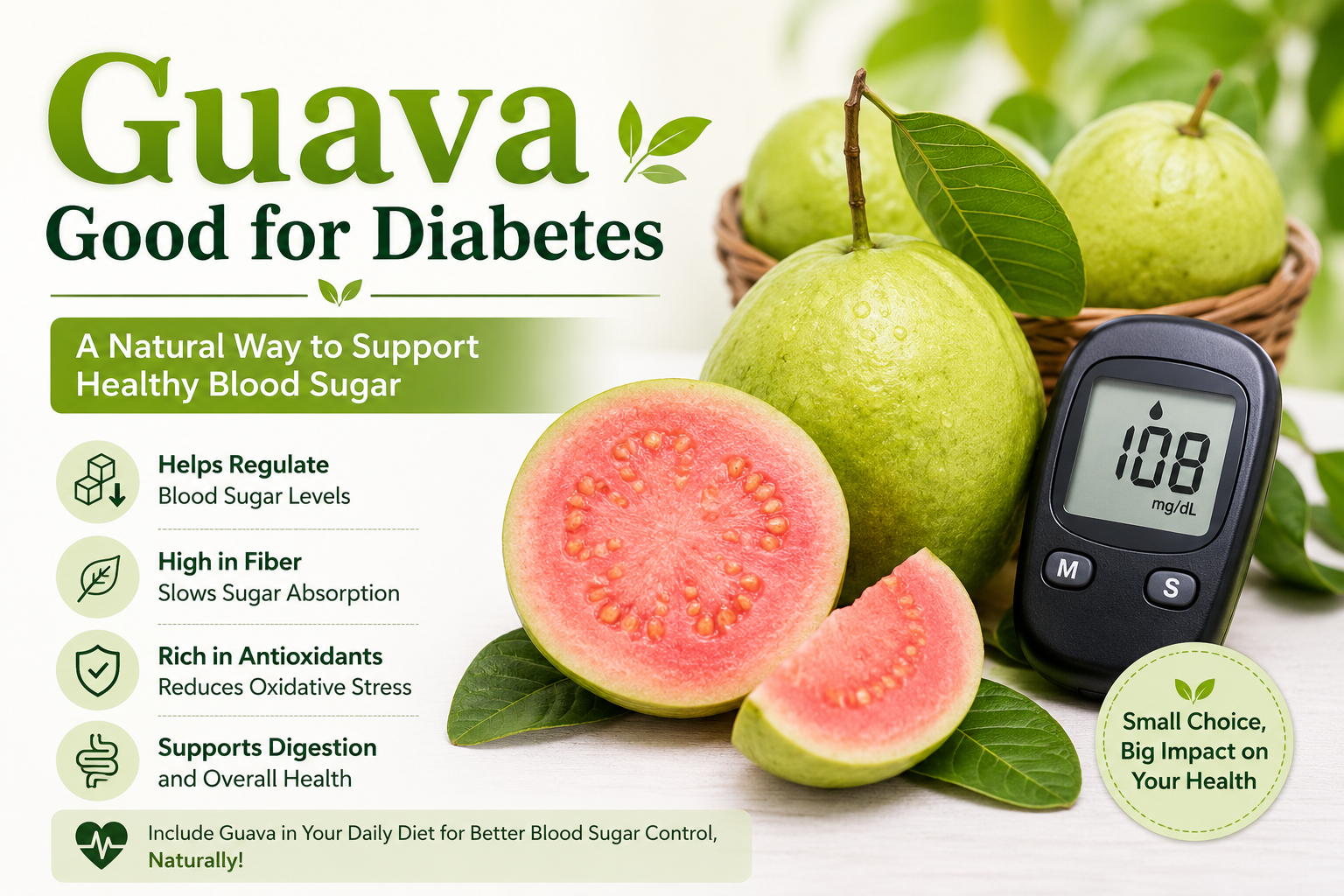
Introduction | परिचय
Imagine biting into a sweet, juicy guava on a warm afternoon. For most people, this is pure pleasure. But if you have diabetes, that simple joy often comes with a nagging question: “Will this spike my blood sugar?” It’s a fair concern. After all, guava is sweet, and sweetness in the diabetic world is often treated with suspicion, even fear.
This is exactly why I call it “The Guava Paradox.” How can a fruit that tastes sweet actually be good for controlling diabetes? The answer lies not in the taste, but in the science—the unique nutritional chemistry that makes guava one of the few fruits that can actually help manage blood glucose rather than harm it.
In this comprehensive guide, we will break down the science, the nutrition, the myths, and the practical ways to include guava in a diabetic diet. Whether you are prediabetic, type 2, or just health-conscious, this article will change the way you look at this humble tropical fruit.
Why the Confusion? The Sweetness Dilemma | भ्रम क्यों? मिठास की दुविधा
When someone is diagnosed with diabetes, the first piece of advice they often receive is to “avoid sugar and sweet fruits.” While well-intentioned, this oversimplification causes many to unnecessarily eliminate nutrient-dense fruits like guava. The key isn’t to avoid sweetness entirely but to understand Glycemic Index (GI) and Glycemic Load (GL) .
Guava has a remarkably low glycemic index of just 12, and a glycemic load of 3-4 per 100 grams . To put that in perspective, a GI below 55 is considered low. This means guava releases its sugars slowly into the bloodstream, preventing the sudden glucose spikes associated with high-GI foods. This is the first piece of evidence resolving the “paradox”—the fruit might taste sweet, but its sugar release mechanism is gentle and controlled.
The Nutritional Profile of Guava | अमरूद की पोषण संरचना
Understanding the nutritional makeup is crucial to understanding the antidiabetic effects.
Key Nutrients per 100g of Raw Guava
- Carbohydrates: 14.32 g
- Dietary Fiber: 5.4 g (a substantial amount for a fruit)
- Proteins: 2.55 g
- Fats: 0.95 g
- Key Nutrients: Vitamin C, Potassium, Antioxidants .
What stands out immediately is the fiber-to-carbohydrate ratio. With over 5 grams of fiber per serving, guava provides more fiber than many other tropical fruits. The presence of this fiber “traps” the sugars, ensuring they are absorbed slowly. Additionally, guava is packed with polyphenols and antioxidants, which are the real heroes behind its medicinal properties .
Scientific Evidence: How Guava Fights Diabetes | वैज्ञानिक प्रमाण: अमरूद कैसे करता है डायबिटीज से बचाव
Over the past decade, researchers have investigated the mechanistic actions of guava (Psidium guajava) on blood sugar. The findings are profound and move beyond mere folklore. As summarized in a 2018 study, “known pharmacological activities of guava include modulation of blood glucose levels” . Here is how it works on a biological level:
1. Inhibition of Intestinal Glucose Transport (GLUT2 and SGLT1)
One of the most significant discoveries is the effect of guava extracts on intestinal glucose transport. A study published in the National Institutes of Health (NIH) repository tested guava fruit and leaf extracts on human intestinal Caco-2 cells. The results showed “substantial dose- and time-dependent glucose transport inhibition (up to 80%)” .
In simple terms, guava contains compounds that partially block the receptors (GLUT2 and SGLT1) in your intestines that absorb sugar. If less sugar is absorbed into the bloodstream immediately after a meal, your blood sugar stays lower. The study concluded that “guava leaf and fruit extracts can potentially contribute to the regulation of blood glucose levels” .
2. Enzyme Inhibition: Slowing Down Carb Breakdown
Carbohydrates need to be broken down by enzymes (like alpha-amylase and alpha-glucosidase) to become simple sugars. Guava interferes with this process. Recent metabolomic research identified 48 molecules in guava, primarily phenolic compounds like (-)-epigallocatechin and gallic acid, which inhibit these enzymes . The study confirmed that aqueous guava fruit extract exerts “competitive inhibition” on these enzymes . This means it slows the breakdown of starch into sugar, mimicking the action of prescription diabetes drugs (like acarbose) but naturally.
3. Effects on the Liver and Glycogen
Guava also acts on the liver. In vivo (animal) studies have shown that guava leaf extracts help regulate “gluconeogenesis and glycogenesis” . It helps the liver convert glucose into storage form (glycogen) more efficiently rather than releasing it into the blood. One study noted that guava leaf aqueous extract had a “reducing effect on the blood glucose level” during oral glucose tolerance tests .
4. Systematic Review Evidence
A systematic review conducted on diabetic patients found a consensus: “guava leaf decoction shows potential as a complementary therapy in the management of diabetes mellitus by naturally lowering blood glucose levels” . Effective regimens included twice-daily administration of leaf decoctions, showing consistent benefits.
Guava Leaf vs. Guava Fruit: What’s Better? | अमरूद की पत्ती बनाम फल: क्या बेहतर है?
While the fruit is delicious, the leaves of the guava tree are also potent antidiabetic agents. Research has shown that leaf extracts often contain higher concentrations of bioactives like flavonoids and triterpenes . However, both are beneficial.
- Fruit: Best for dietary fiber, Vitamin C, and moderate inhibition of sugar absorption.
- Leaves: Used primarily in teas or decoctions. They have a stronger effect on inhibiting glycoside hydrolase (the enzyme that breaks sugars) and protecting the pancreas .
Debunking Myths: Guava is NOT a “Cure” | मिथकों का खंडन
It is crucial to address the misinformation that often circulates on social media. Recently, a claim went viral stating that eating two guava leaves could “cure diabetes in 15 days.” This is FALSE . Guava is a “beneficial supplement” and an “adjunct” to therapy, not a replacement for insulin or prescription medication . As noted by health experts, guava leaves “will definitely not cure diabetes… it is not recommended to substitute evidence-based insulin therapy or anti-diabetic medications with guava leaves” .
Detailed FAQs: All You Need to Know | विस्तृत प्रश्नोत्तर
Here are 40 frequently asked questions to dispel all doubts regarding guava and diabetes.
General & Nutritional Queries
1. Is guava good for diabetes?
Yes, guava is excellent for diabetes due to its low glycemic index of 12 and high fiber content. It helps prevent sudden blood sugar spikes .
2. What is the glycemic index of guava?
The glycemic index of guava is 12, making it a low-GI fruit suitable for diabetic diets .
3. How much sugar is in a guava?
A medium guava (55g) contains about 14 grams of carbs, but most of this is offset by the 5.4 grams of dietary fiber, which slows sugar absorption .
4. Can I eat guava daily with diabetes?
Yes. Consuming one medium-sized guava daily is safe and beneficial, provided you monitor your blood glucose to see how your body reacts .
5. Is guava high in carbohydrates?
Guava is moderate in carbohydrates (14.32g per 100g) but is considered low-carb friendly because of its high fiber content .
6. Does guava increase blood sugar immediately?
No. Guava has a minimal short-term impact due to its low glycemic load. The fiber content delays the release of sugar into the bloodstream .
7. Is guava safe for Type 2 diabetes?
Yes. In fact, Type 2 diabetics are frequently advised to choose guava over high-sugar fruits like bananas or grapes.
8. Is guava safe for Type 1 diabetes?
Yes, but Type 1 diabetics still require insulin. Guava can help manage postprandial (after-meal) spikes but is not a substitute for insulin therapy .
9. How many guavas can a diabetic eat per day?
Generally, one medium guava (approx. 150-200 grams) is recommended to maintain safe glucose levels.
10. Can prediabetics eat guava?
Absolutely. Its effect on insulin resistance makes it a great preventative fruit for those at risk of developing diabetes.
Health Benefits
11. How does guava help in weight management for diabetics?
Guava is rich in fiber and low in calories. Fiber promotes satiety, reducing overall appetite and helping in weight loss, which is crucial for managing Type 2 diabetes .
12. Does guava improve insulin sensitivity?
The polyphenols in guava, such as quercetin, have been shown to improve insulin sensitivity by enhancing the uptake of glucose by cells .
13. Does guava contain Vitamin C?
Yes, guava is incredibly rich in Vitamin C, even more than oranges. This helps in protecting against oxidative stress, which is common in diabetes .
14. Does guava lower cholesterol?
Yes. It helps lower bad cholesterol (LDL) and raises good cholesterol (HDL), improving heart health, which is a major concern for diabetics .
15. Is guava good for digestion?
Guava is high in fiber, which helps bulk up stool and relieves constipation, a common issue in diabetics due to nerve damage .
16. Does guava help with high blood pressure?
Guava contains potassium and magnesium, which help relax blood vessels and lower blood pressure—a common comorbidity with diabetes.
17. Can guava leaf tea help diabetes?
Yes. Guava leaf tea inhibits alpha-glucosidase enzymes, reducing the conversion of complex carbs into sugars, thus helping manage post-meal glucose .
18. Does guava reduce insulin resistance?
Studies suggest that guava fruit extract influences metabolic pathways involved in gluconeogenesis and glycogenesis, helping with insulin resistance .
19. Can guava leaves regenerate pancreas cells?
No. There is no scientific evidence to support the claim that guava leaves regenerate pancreatic beta cells .
20. Does guava cure diabetes?
No, there is currently no cure for diabetes. Guava is a supportive food that helps manage blood glucose levels, not a cure .
Consumption & Preparation
21. Should diabetics eat guava with the skin or without the skin?
Nutritionists suggest that diabetics with high cholesterol or high blood sugar should peel the guava before eating. Studies suggest removing the skin can help control lipid levels and sugar more effectively .
22. When is the best time to eat guava for diabetes?
As a snack between meals or as part of your breakfast is ideal. This helps avoid post-meal spikes.
23. Can I eat guava at night with diabetes?
Yes, but keep it light. Eating it as a pre-bed snack (if hungry) is okay because the fiber won’t spike your sugar overnight. Avoid eating too close to dinner.
24. Is raw guava better than ripe guava for diabetes?
Raw guava (green) tends to have less sugar and more starch, which is harder to digest, meaning it might have an even lower glycemic impact.
25. Can I drink guava leaf water?
Yes. Boiling guava leaves in water for 10-15 minutes creates a decoction that has been shown to significantly reduce blood glucose levels in some studies .
26. Is packaged guava juice good for diabetes?
No. Commercial juices often contain added sugar, which defeats the purpose. It is best to eat the whole fruit to retain the fiber.
27. Can I mix guava with other foods for better results?
Yes. Pairing guava with a protein source like nuts or yogurt can further slow sugar absorption .
28. Should I eat guava before or after meals?
Eating guava 30 minutes before a meal can help fill you up and reduce the total carbohydrate intake during the meal.
29. Can I freeze guava for later use?
Yes, freezing preserves the nutrients, but the texture might change. It is best used in smoothies.
30. Is guava fruit extract as good as the whole fruit?
No. The whole fruit provides the necessary fiber. Extracts are more concentrated and usually used in clinical settings for specific medicinal effects.
Scientific & Safety Queries
31. Can I take guava with my diabetes medication?
While generally safe, high doses of guava leaf extract in combination with standard drugs might lower blood sugar too much (hypoglycemia). Monitor your sugar levels .
32. Are there any side effects of eating too much guava?
Excessive intake can cause bloating or upset stomach due to high fiber content. It is best to introduce it gradually.
33. Can guava leaf interact with blood pressure medications?
Yes. Because guava can lower blood pressure, taking it with hypertension drugs might cause blood pressure to drop too low. Consult a doctor .
34. How long does it take for guava leaves to lower blood sugar?
Immediate. Some studies show the OGTT (Oral Glucose Tolerance Test) lowering effect occurs within 30 minutes to 2 hours . However, sustainable results take weeks.
35. Does traditional Ayurveda recommend guava for diabetes?
Yes. Ayurveda classifies guava (Amrutaphala) as an astringent fruit that balances Kapha and Pitta doshas and is used in managing Madhumeha (diabetes) .
36. Are guava leaves effective against alpha-amylase?
Yes. Scientific studies show that guava leaves are effective inhibitors of alpha-amylase, with an IC50 value of 0.65 mg/ml, meaning it is quite potent at preventing starch breakdown .
37. What are the main bioactive compounds in guava?
The main compounds are quercetin, gallic acid, ellagic acid, and catechin. These are types of polyphenols with strong anti-hyperglycemic properties .
38. Is there a difference in effect between red guava and white guava?
Both have similar fiber and carb content. Red guava often has more lycopene (an antioxidant), while white guava is slightly higher in Vitamin C, but both are excellent.
39. Can guava help reduce HbA1c levels?
Long-term consumption of guava, as part of a calorie-controlled diet, is associated with improved long-term blood sugar management, potentially lowering HbA1c .
40. Is guava seed edible for diabetics?
Yes, the seeds are rich in insoluble fiber and are safe to eat. However, some people prefer to remove them for easier digestion.
Conclusion | निष्कर्ष
The guava paradox is resolved by science: sweetness does not equal danger. Guava is a stellar example of a functional food. With its remarkably low glycemic index, potent glucose transport inhibition, and high dietary fiber, it stands as one of the most effective natural aids for blood sugar control .
While it is not a magic cure, incorporating guava into a balanced diabetic diet can provide tangible benefits. It helps manage post-meal spikes, supports heart health, and aids weight management. For the millions living with diabetes, guava offers a safe, delicious, and scientifically-backed way to enjoy a sweet taste without the guilt.
Key Takeaways:
- Eat the fruit, not the juice: The fiber is essential.
- Consider the peel: If you have high cholesterol, peeling it might be beneficial .
- Monitor your response: Every body is different. Always check your glucose levels 2 hours after eating to understand your tolerance.
- Consult your doctor: If you are on strong medications, ensure your consumption doesn’t cause hypoglycemia.
As Ayurvedic experts suggest, managing diabetes is about holistic changes—diet, sleep, and exercise . Guava is a powerful partner in that journey. So, go ahead, enjoy the paradox, and eat your guava with confidence.