Boosting Male Fertility: 15 Proven Ways to Increase Sperm Count & Quality Naturally
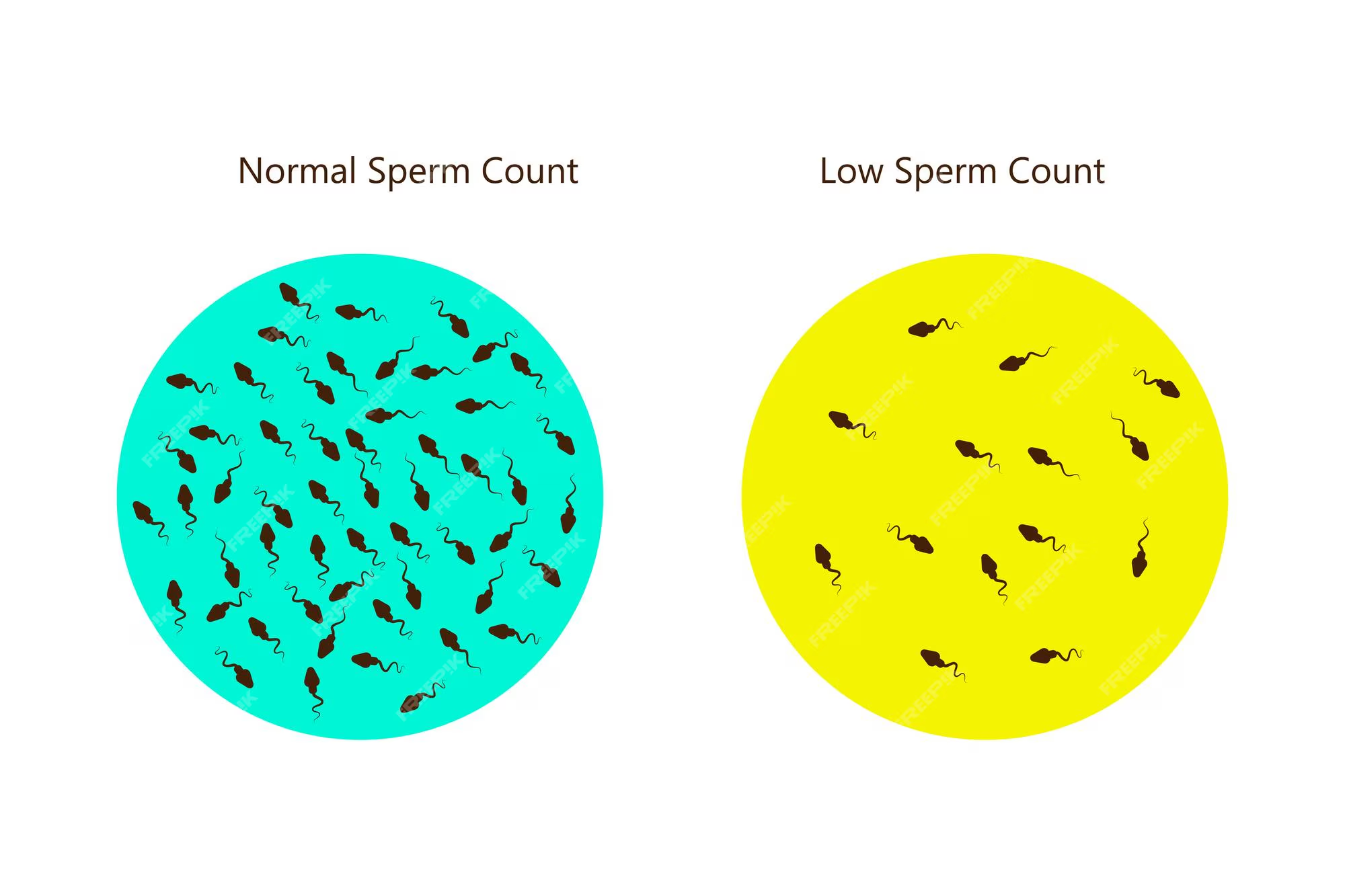
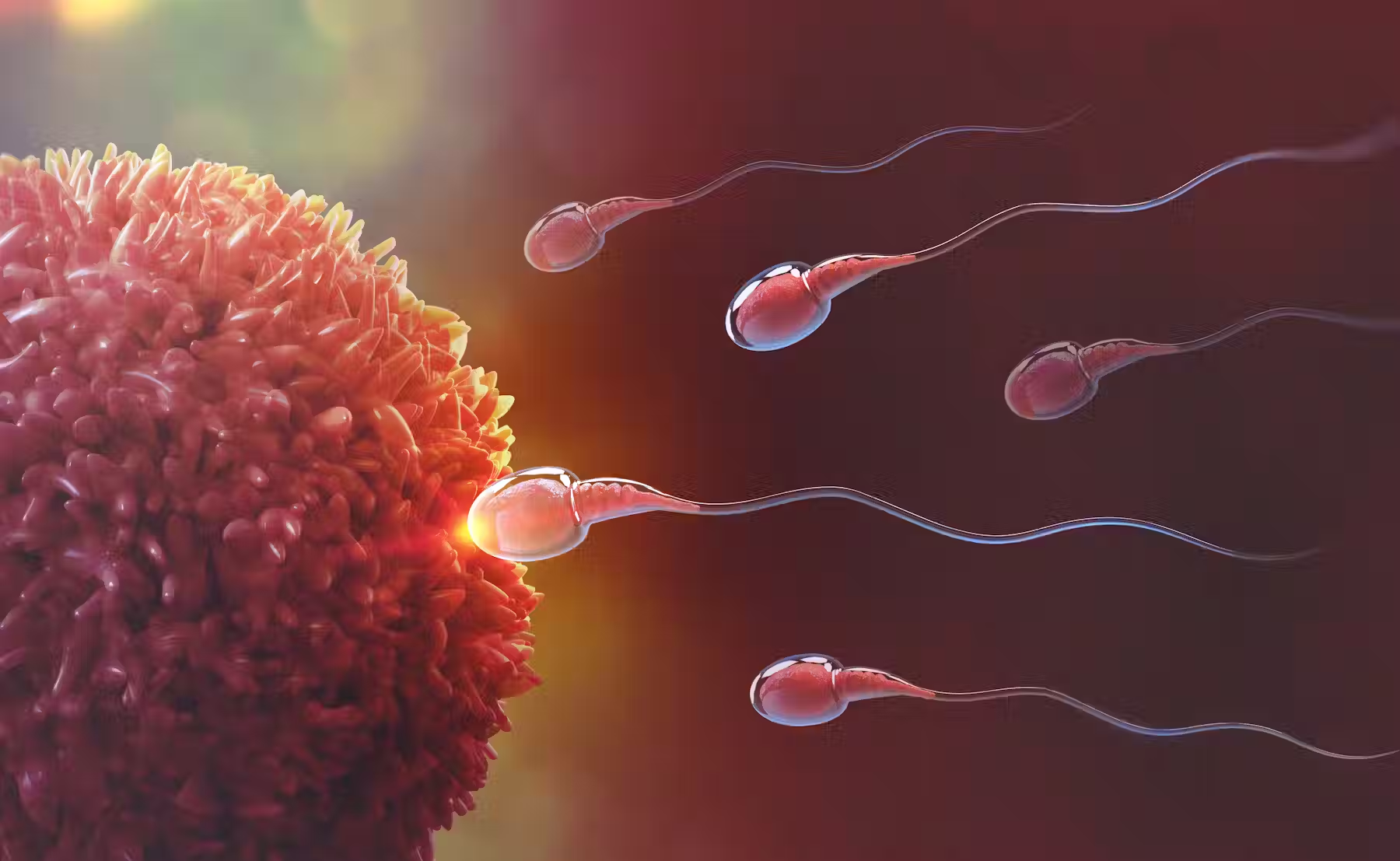
Introduction Male fertility issues contribute to 40-50% of conception challenges, with low sperm count, poor motility, or abnormal morphology being common causes. The good news? Many natural, medical, and lifestyle approaches can significantly improve sperm health. This 4,000-word guide explores 15 proven methods to boost sperm count, enhance motility, and optimize overall fertility. Understanding Sperm Health | Key Factors That … Read more

![Introduction Malaria remains one of the deadliest mosquito-borne diseases, affecting millions worldwide. Caused by the Plasmodium parasite and transmitted through Anopheles mosquito bites, malaria can lead to severe complications if untreated. This comprehensive guide explores its causes, symptoms, prevention strategies, and treatment options. What Is Malaria? | A Deadly Parasitic Infection Malaria is a life-threatening disease caused by Plasmodium parasites, transmitted through the bites of infected Anopheles mosquitoes. Five parasite species infect humans, with Plasmodium falciparum being the most dangerous. How Is Malaria Transmitted? | The Role of Mosquitoes Malaria spreads when an infected Anopheles mosquito bites a person, injecting Plasmodium parasites into the bloodstream. Less common transmission methods include: Blood transfusions Mother-to-child during pregnancy Shared needle use Malaria Symptoms | Early Signs to Watch For Symptoms typically appear 10-15 days after infection and include: ✔ High fever ✔ Chills and sweats ✔ Headaches and muscle pain ✔ Fatigue and nausea ✔ Anemia and jaundice (in severe cases) Severe Malaria Complications | When It Becomes Life-Threatening Untreated malaria can progress to severe complications: Cerebral malaria (brain swelling) Organ failure (kidneys, liver) Severe anemia Respiratory distress Malaria Diagnosis | How Doctors Confirm Infection Diagnostic methods include: Rapid Diagnostic Tests (RDTs) – Detects parasite proteins. Microscopy – Gold standard for identifying parasites in blood. PCR Testing – For precise species identification. Malaria Treatment | Effective Antimalarial Drugs Treatment depends on the [Plasmodium] species and severity: Chloroquine (for sensitive strains) Artemisinin-based Combination Therapy (ACT) – First-line for [P. falciparum] Quinine + Doxycycline – For severe cases Malaria Prevention | How to Stay Protected Preventive measures include: ✅ Insecticide-treated nets (ITNs) ✅ Indoor residual spraying (IRS) ✅ Antimalarial prophylaxis for travelers ✅ Malaria vaccine (RTS,S) for children in endemic areas Malaria Vaccine | Breakthrough in Prevention The RTS,S/AS01 (Mosquirix) vaccine, approved by WHO, reduces severe malaria cases in children by 30%. Research continues for more effective vaccines. Malaria and Pregnancy | Risks and Precautions Pregnant women face higher risks, including: Miscarriage Low birth weight Maternal anemia Prevention involves ITNs and intermittent preventive treatment (IPTp). Malaria FAQs: Your Top Questions Answered 1. What causes malaria? Malaria is caused by Plasmodium parasites transmitted via Anopheles mosquito bites. 2. What are the first signs of malaria? Early symptoms include fever, chills, headache, and muscle pain. 3. How is malaria diagnosed? Through blood tests like RDTs, microscopy, or PCR. 4. Can malaria kill you? Yes, severe malaria can be fatal without prompt treatment. 5. Is there a malaria vaccine? Yes, the RTS,S vaccine is approved for children in high-risk areas. 6. How can I prevent malaria? Use mosquito nets, repellents, and take antimalarial drugs if traveling to endemic regions. 7. Which countries have the highest malaria risk? Sub-Saharan Africa, South Asia, and parts of South America. 8. Can malaria recur after treatment? Yes, some species (like P. vivax) can remain dormant and relapse. 9. How long does malaria last? With treatment, symptoms improve in 2-3 days; without treatment, it can persist for weeks. 10. Can you get malaria twice? Yes, reinfection is possible if bitten again by an infected mosquito. 11. What's the incubation period for malaria? The time between mosquito bite and symptoms varies by parasite: P. falciparum: 9-14 days P. vivax: 12-18 days (can remain dormant for months/years) P. malariae: 18-40 days 12. Can malaria spread person-to-person? No direct human-to-human transmission except: Mother to fetus (congenital malaria) Blood transfusions Organ transplants Needle sharing 13. What's the most dangerous malaria type? Plasmodium falciparum causes: 90% of malaria deaths Cerebral malaria (brain complications) Rapid progression to severe illness 14. How effective are malaria bed nets? Insecticide-treated nets (ITNs): Reduce malaria cases by 50% Kill and repel mosquitoes Protect entire families when used properly 15. What antimalarial drugs prevent infection? Common prophylactics include: Doxycycline (daily) Malarone (atovaquone-proguanil, daily) Mefloquine (weekly) Chloroquine (in sensitive regions only) 16. Can you get malaria in urban areas? Risk depends on: Local mosquito breeding sites Sanitation conditions Climate (rainfall/temperature) Many African cities still have transmission 17. What's the best malaria treatment? WHO recommends: Artemisinin-based combination therapy (ACT) IV artesunate for severe cases Primaquine for P. vivax/P. ovale (prevents relapse) 18. How does climate change affect malaria? Warming expands: Mosquito habitat ranges Transmission seasons Higher altitudes becoming risk areas 19. Can malaria cause long-term effects? Possible complications: Neurological damage (after cerebral malaria) Chronic anemia Splenomegaly (enlarged spleen) Increased susceptibility to other infections 20. Why is malaria deadly for children? Pediatric vulnerabilities: Less developed immunity Rapid progression to severe anemia Higher risk of cerebral complications Accounts for 67% of malaria deaths 21. What's the R21/Matrix-M malaria vaccine? Newer vaccine (2023 WHO-approved): 75% efficacy in trials Lower cost than RTS,S Requires 4 doses For children in endemic areas 22. How do mosquitoes transmit malaria? Transmission cycle: Mosquito bites infected person Parasites develop in mosquito (10-18 days) Infected mosquito bites new victim Parasites multiply in human liver then blood 23. Can malaria be eradicated? Global eradication challenges: Mosquito resistance to insecticides Drug-resistant parasites Funding gaps Current goal: 90% reduction by 2030 24. What's "asymptomatic malaria"? Parasites present without symptoms: Common in endemic areas Can still transmit to mosquitoes Detected only by testing 25. How accurate are malaria rapid tests? RDT performance: 95% sensitivity for P. falciparum Lower for other species Can give false negatives early in infection 26. Why does malaria cause cyclical fevers? Fever patterns correspond to: Synchronized parasite replication P. vivax: 48-hour cycles ("tertian fever") P. malariae: 72-hour cycles ("quartan fever") 27. Can you build immunity to malaria? Partial immunity develops: After multiple infections Doesn't prevent reinfection Reduces severity over time Lost after leaving endemic areas 28. What's "blackwater fever"? Severe complication featuring: Dark urine (hemoglobinuria) Massive red blood cell destruction Kidney failure risk Associated with falciparum malaria 29. How is malaria treated in pregnancy? Special considerations: ACTs generally safe after 1st trimester IV quinine for severe cases Additional iron/folate often needed 30. What's "cerebral malaria"? Life-threatening neurological form: Altered consciousness Seizures 15-20% mortality even with treatment Can cause long-term cognitive deficits 31. Can malaria parasites become resistant? Growing resistance issues: Artemisinin resistance in SE Asia Chloroquine resistance worldwide Mosquito resistance to pyrethroids 32. How do you prevent malaria relapse? For P. vivax/P. ovale: Primaquine (14-day course) Tafenoquine (single dose) Requires G6PD testing first (risk of anemia) 33. What's "bubble malaria"? Misconception alert: No such medical term exists May confuse with dengue ("breakbone fever") False social media terminology 34. Can malaria affect the heart? Cardiac complications: Myocarditis (rare) Electrolyte imbalances Hypotension from severe infection 35. How is malaria different from dengue? Key distinctions: Malaria: Parasitic cause Cyclical fevers Blood smear diagnosis Dengue: Viral cause Continuous high fever Rapid test/NS1 antigen detection 36. What's "airport malaria"? Rare cases where: Infected mosquitoes travel by plane Bite people near airports Causes local transmission in non-endemic areas 37. Can malaria cause mental health issues? Post-malaria conditions: Depression/anxiety PTSD from severe illness Cognitive impairment after cerebral malaria 38. How do you control malaria outbreaks? Public health measures: Mass drug administration Indoor residual spraying Community education Enhanced surveillance 39. What animals carry malaria? Zoonotic malaria species: P. knowlesi (macaques in SE Asia) Can infect humans Causes severe illness similar to falciparum 40. Where can I get malaria travel advice? Reliable resources: CDC Malaria Map by Country WHO International Travel Guidelines Tropical medicine clinics National public health agencies Conclusion Malaria remains a global health threat, but with proper prevention, early diagnosis, and effective treatment, its impact can be reduced. Stay informed, take protective measures, and seek medical help if symptoms arise.](https://arogyambharat.com/wp-content/uploads/2025/06/malaria.png)