
Introduction
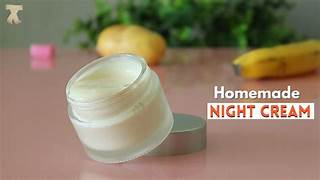
Achieving glowing skin doesn’t always require expensive products. Nature offers powerful ingredients that can deeply nourish your skin while you sleep. In this article, we’ll explore 5 homemade night creams packed with vitamins, antioxidants, and hydrating agents to repair, rejuvenate, and brighten your skin overnight.
Why Use a Homemade Night Cream?
Nighttime is when your skin repairs itself. A nourishing night cream enhances this process by:
Locking in moisture
Reducing fine lines and wrinkles
Brightening dull skin
Healing acne and scars
Store-bought creams often contain chemicals, but homemade night creams are natural, safe, and cost-effective.
1 | Coconut Oil and Aloe Vera Night Cream | Deep Hydration & Repair
Ingredients:
2 tbsp coconut oil (moisturizing)
1 tbsp aloe vera gel (soothing)
5 drops lavender essential oil (calming)
Benefits:
Coconut oil penetrates deeply to prevent dryness.
Aloe vera reduces inflammation and redness.
Lavender oil promotes relaxation and skin healing.
How to Use:
Mix ingredients, apply before bed, and rinse in the morning.
2 | Shea Butter and Rosehip Oil Night Cream | Anti-Aging Powerhouse
Ingredients:
3 tbsp shea butter (rich in vitamins A & E)
1 tbsp rosehip oil (fights wrinkles)
1 tsp honey (antibacterial)
Benefits:
Shea butter boosts collagen production.
Rosehip oil reduces dark spots and fine lines.
Honey adds a natural glow.
How to Use:
Whip shea butter, blend with other ingredients, and apply nightly.
3 | Avocado and Yogurt Night Cream | Intense Moisturization
Ingredients:
½ ripe avocado (fatty acids)
2 tbsp yogurt (lactic acid exfoliation)
1 tsp almond oil (vitamin E)
Benefits:
Avocado deeply hydrates dry skin.
Yogurt gently exfoliates dead skin cells.
Almond oil softens and brightens.
How to Use:
Blend into a paste, apply, and leave overnight.
4 | Green Tea and Jojoba Oil Night Cream | Antioxidant Boost
Ingredients:
1 brewed green tea bag (antioxidants)
2 tbsp jojoba oil (balances oil production)
1 tsp glycerin (locks moisture)
Benefits:
Green tea fights free radicals.
Jojoba oil mimics skin’s natural oils.
Glycerin prevents water loss.
How to Use:
Mix cooled tea with oils, apply, and sleep.
5 | Cocoa Butter and Vitamin E Night Cream | Ultra-Repairing
Ingredients:
3 tbsp cocoa butter (healing)
2 vitamin E capsules (skin repair)
1 tbsp oatmeal powder (soothing)
Benefits:
Cocoa butter prevents stretch marks.
Vitamin E accelerates cell regeneration.
Oatmeal calms irritated skin.
How to Use:
Melt cocoa butter, mix ingredients, and apply before bed.
FAQs About Homemade Night Creams
1. Are homemade night creams effective?
Absolutely! Ingredients like coconut oil and aloe vera deliver concentrated nutrients without synthetic additives, making them ideal for deep skin repair.
2. How long do homemade night creams last?
Since they lack preservatives, store them in the fridge for 1–2 weeks. Creams with honey or vitamin E may last slightly longer.
3. Can I use these creams if I have oily skin?
Yes! Choose non-comedogenic oils (jojoba, grapeseed) and avoid heavy butters like cocoa or shea if your skin is acne-prone.
4. Do these creams help with acne?
Yes! Aloe vera (anti-inflammatory), honey (antibacterial), and tea tree oil (clarifying) combat breakouts while healing scars.
5. Can I use essential oils in night creams?
Yes, but always dilute 1–2 drops per tablespoon of carrier oil. Patch-test first to avoid irritation.
6. Which night cream is best for dry skin?
Shea butter + rosehip oil or avocado + yogurt creams provide intense hydration and barrier repair.
7. Can I use these creams under my eyes?
Yes, but avoid essential oils. Use gentle ingredients like almond oil or aloe vera to reduce puffiness.
8. How often should I apply homemade night cream?
Every night for best results. Skin repairs itself during sleep, so consistency is key.
9. Will coconut oil clog pores?
It can for oily/acne-prone skin. Opt for fractionated coconut oil (lighter) or switch to jojoba oil.
10. Can I add sunscreen to these creams?
No. Sunscreen requires precise formulations. Use these creams at night and apply SPF in the morning.
11. What’s the best cream for anti-aging?
Shea butter + rosehip oil (collagen boost) or green tea + vitamin E (antioxidant-rich) reduce wrinkles.
12. Can men use these night creams?
Yes! Skincare is gender-neutral. Men benefit equally from hydration and repair.
13. How do I thicken a runny night cream?
Add beeswax, cocoa butter, or arrowroot powder for a richer texture.
14. Can I use olive oil in night creams?
Yes, but it’s heavy. Better for very dry skin. Sweet almond oil is a lighter alternative.
15. Do these creams lighten dark spots?
Rosehip oil (vitamin C) and yogurt (lactic acid) gradually brighten hyperpigmentation.
16. Can I use frozen aloe vera gel?
Yes! Thaw it before mixing. Frozen aloe retains its healing properties.
17. Is glycerin safe for sensitive skin?
Yes, but dilute it (1 tsp per 2 tbsp base). Pure glycerin can be drying.
18. Can I add lemon juice for brightening?
No! Lemon is too acidic and can cause irritation or sun sensitivity. Use rosewater instead.
19. What’s a quick 2-ingredient night cream?
Aloe vera + coconut oil – mix equal parts for hydration and soothing benefits.
20. How do I preserve homemade creams longer?
Add vitamin E oil (natural preservative) or store in an airtight container in the fridge.
21. Can I use these creams in summer?
Yes! Switch to lighter oils (jojoba, grapeseed) and avoid heavy butters.
22. Will these creams work on eczema?
Shea butter + oatmeal creams reduce itching and inflammation. Avoid essential oils.
23. Can I use baby oil as a base?
No. Most baby oils are mineral-based. Stick to natural carriers like almond or jojoba oil.
24. What’s the best cream for combination skin?
Aloe vera + jojoba oil balances moisture without clogging pores.
25. Can I add turmeric to my night cream?
Yes! Turmeric + yogurt brightens skin, but use sparingly (½ tsp) to avoid staining.
26. How do I know if I’m allergic to an ingredient?
Patch-test on your wrist. If redness/itching occurs within 24 hours, avoid it.
27. Can I use these creams if I’m pregnant?
Avoid essential oils (lavender, rosemary). Stick to plain shea butter or aloe vera.
28. What’s the best cream for rosacea?
Oatmeal + aloe vera soothes redness and inflammation.
29. Can I use expired ingredients?
No. Rancid oils or expired yogurt can cause breakouts or irritation.
30. How do I make a fragrance-free cream?
Skip essential oils. Use plain shea butter or cocoa butter for a natural scent.
31. Can I use coffee grounds in night creams?
No (too abrasive). Use coffee oil for antioxidants without scrubbing.
32. What’s the best cream for mature skin?
Cocoa butter + vitamin E boosts elasticity and reduces fine lines.
33. Can I use these creams with retinol?
No. Homemade creams lack stabilized retinol. Use them on alternate nights.
34. How do I fix a grainy shea butter cream?
Melt it gently and whip again. Graininess means it cooled too fast.
35. Can I use almond flour as a thickener?
No. It’s exfoliating. Use arrowroot powder or beeswax instead.
36. What’s the best cream for sunburned skin?
Aloe vera + cucumber gel cools and repairs damaged skin overnight.
37. Can I use these creams on my neck?
Yes! The neck needs hydration too. Apply upward strokes to avoid sagging.
38. Can I add niacinamide powder?
No. DIY formulations can’t stabilize niacinamide. Use store-bought serums instead.
39. How do I make a vegan night cream?
Skip honey and beeswax. Use candelilla wax and agave nectar as substitutes.
40. Can I use these creams with makeup?
Apply them at night only. For daytime, use a lighter moisturizer under makeup.
Conclusion
Switching to homemade night creams ensures your skin gets pure, chemical-free nourishment. Try these recipes tonight and wake up to softer, brighter, and younger-looking skin!
Would you like a customized night cream recipe for your skin type? Let us know in the comments!